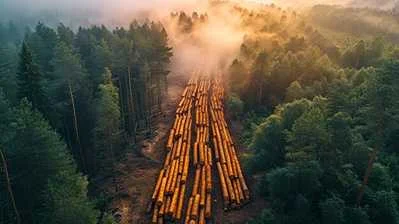
Forestry mulching is a highly efficient and environmentally friendly method of land clearing that has become increasingly popular in modern land management. Instead of using multiple machines to cut, haul, and dispose of vegetation, this technique uses specialized equipment to grind trees, brush, and undergrowth directly into mulch. The result is a cleaner, faster, and more sustainable approach to clearing land while improving soil health at the same time.
Unlike traditional clearing methods that often disturb the soil and generate large amounts of waste, forestry mulching simplifies the entire process into a single step. Vegetation is removed and immediately recycled back into the ground as natural mulch, which helps protect the soil and support future plant growth.
As land development, environmental conservation, and property management continue to evolve, Forestry Mulching has become a preferred solution for both small-scale property owners and large commercial projects.
Understanding Forestry Mulching and How It Works
Forestry mulching is a land clearing process that uses a single machine equipped with a rotating drum or cutting head to grind vegetation into fine mulch. This machine can clear brush, small trees, vines, and overgrown vegetation in a controlled and efficient manner.
As the machine moves across the land, it cuts and processes vegetation instantly, leaving behind a layer of organic mulch. This mulch is evenly spread across the ground, eliminating the need for hauling or burning debris.
One of the key advantages of Forestry Mulching is that it reduces the number of steps required in traditional land clearing. Instead of cutting, collecting, transporting, and disposing of vegetation separately, everything is completed in one continuous process.
This method is especially effective in areas where soil preservation and environmental protection are important.
Why Forestry Mulching Is Gaining Popularity
The growing demand for forestry mulching is driven by its efficiency, cost-effectiveness, and environmental benefits. Traditional land clearing methods often require heavy equipment, multiple workers, and additional cleanup efforts.
In contrast, forestry mulching uses a single machine and operator, which significantly reduces labor and equipment costs. The process is also much faster, allowing projects to be completed in less time.
Another reason for its popularity is the reduced environmental impact. Since vegetation is not burned or hauled away, there is less air pollution and no need for landfill disposal.
Property owners and land developers increasingly prefer Forestry Mulching because it delivers clean, usable land without the negative side effects of traditional clearing methods.
Environmental Benefits of Forestry Mulching
Forestry mulching offers several important environmental advantages. One of the most significant is soil protection. The mulch layer created during the process acts as a natural barrier that reduces erosion caused by wind and water.
It also helps retain moisture in the soil, which supports healthier plant growth and reduces the need for irrigation in some areas. As the mulch decomposes, it adds organic matter back into the soil, improving fertility and overall soil structure.
Another environmental benefit is reduced carbon emissions. Since fewer machines are required and there is no need for transportation of debris, fuel consumption is significantly lower compared to traditional clearing methods.
By preserving the natural ecosystem and minimizing disruption, Forestry Mulching supports sustainable land management practices.
Applications of Forestry Mulching
Forestry mulching is used in a wide variety of applications due to its flexibility and efficiency. It is commonly used for clearing overgrown residential properties, managing commercial land, and preparing sites for development.
It is also widely used for maintaining trails, clearing utility rights-of-way, and managing vegetation around infrastructure. This helps improve accessibility and reduce safety risks caused by overgrowth.
In agricultural settings, forestry mulching is used to clear fields and improve land usability without damaging soil quality. It is also an effective method for fire prevention by reducing dense vegetation that can fuel wildfires.
Because of its versatility, Forestry Mulching is suitable for both small and large-scale projects.
Equipment Used in Forestry Mulching
The machinery used in forestry mulching is specifically designed for heavy-duty vegetation management. These machines are equipped with powerful rotating drums or discs fitted with cutting teeth that grind vegetation into mulch.
Depending on the type of equipment, forestry mulchers can handle everything from light brush to medium-sized trees. The machines are designed to operate efficiently in uneven terrain, dense vegetation, and environmentally sensitive areas.
Modern equipment also focuses on precision and control, allowing operators to selectively clear vegetation without damaging surrounding areas.
This advanced machinery is one of the main reasons Forestry Mulching has become so efficient compared to older land clearing techniques.
Comparison With Traditional Land Clearing Methods
Traditional land clearing typically involves multiple steps, including cutting trees, removing debris, transporting materials, and sometimes burning waste. These methods are time-consuming, expensive, and often disruptive to the environment.
Forestry mulching, on the other hand, combines all of these steps into a single operation. Vegetation is cut and processed on-site, eliminating the need for hauling or disposal.
This not only saves time and money but also reduces soil disturbance. Traditional methods often strip away topsoil or damage root systems, while forestry mulching preserves soil structure and promotes natural regeneration.
Because of these advantages, Forestry Mulching is increasingly seen as a more modern and efficient alternative to conventional land clearing.
Soil Health and Long-Term Land Benefits
One of the long-term benefits of forestry mulching is its positive impact on soil health. The mulch layer left behind helps protect the soil from erosion and extreme weather conditions.
As the mulch decomposes, it adds organic nutrients back into the soil, improving its fertility and structure. This creates a healthier environment for future vegetation growth.
The mulch also helps regulate soil temperature and retain moisture, which can be especially beneficial in dry or exposed areas.
These long-term benefits make Forestry Mulching not just a clearing method but also a land improvement strategy.
Cost Efficiency of Forestry Mulching
Forestry mulching is often more cost-effective than traditional land clearing methods. Since it eliminates the need for multiple machines, transportation, and disposal fees, overall project costs are significantly reduced.
The faster completion time also reduces labor costs, making it an economical choice for both residential and commercial projects.
Additionally, because the mulch remains on-site and contributes to soil health, there is no need for additional landscaping or soil restoration in many cases.
Safety Benefits of Forestry Mulching
Safety is another important advantage of forestry mulching. Traditional land clearing methods involve multiple machines, chainsaws, and burning processes, all of which carry higher safety risks.
Forestry mulching reduces these risks by using a single machine operated by a trained professional. This minimizes on-site activity and reduces the chance of accidents.
It also eliminates the risks associated with burning debris, such as uncontrolled fires or air pollution.
Maintenance and Land Use After Mulching
After forestry mulching is completed, the land is typically left in a clean and usable condition. The mulch layer naturally decomposes over time and continues to improve soil quality.
In some cases, minimal maintenance may be required to control regrowth of vegetation, depending on the intended land use.
Overall, Forestry Mulching provides a low-maintenance solution for long-term land management and development.
Limitations of Forestry Mulching
While forestry mulching is highly effective, it does have some limitations. It may not be suitable for areas that require complete removal of large tree stumps or deep root systems.
In very dense or heavily wooded areas, preliminary clearing may be needed before mulching can be performed effectively.
However, for most standard land clearing projects, Forestry Mulching remains one of the most efficient and environmentally friendly options available.
Future of Forestry Mulching in Land Management
As environmental awareness continues to grow, forestry mulching is expected to play an even larger role in land management. Its ability to combine efficiency, sustainability, and cost savings makes it an attractive alternative to traditional clearing methods.
Advancements in equipment technology are also expanding its capabilities, allowing it to handle more complex and large-scale projects.
With increasing demand for eco-friendly solutions, Forestry Mulching is likely to remain a key method in modern land development and conservation practices.
Final Thoughts
Forestry mulching is a powerful and sustainable land clearing method that offers significant advantages over traditional techniques. It simplifies the clearing process, reduces environmental impact, improves soil health, and lowers overall costs.
By turning unwanted vegetation into beneficial mulch, it supports long-term land sustainability while providing immediate clearing results. Its versatility makes it suitable for a wide range of applications, from residential properties to large commercial developments.
As land management practices continue to evolve, Forestry Mulching stands out as a modern solution that balances efficiency with environmental responsibility, making it an essential tool for today’s property and land development needs.