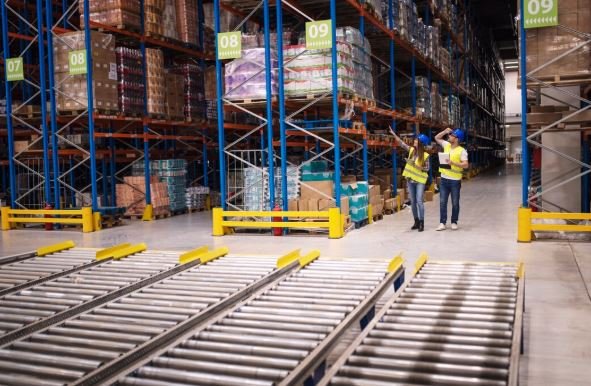
Warehouse racking systems Singapore businesses rely on must do more than simply hold pallets off the ground. They must fit the building, match the product mix, comply with safety codes, and allow room for growth. In a country where industrial rent ranks among the highest in Asia, every square metre of floor space and every metre of ceiling height needs to earn its place. The storage layout is where that efficiency begins.
Singapore’s Unique Storage Challenges
The island’s land constraints are well documented. Industrial estates in Tuas, Jurong, and Changi offer limited footprints, often with irregular column grids and varying floor load capacities. Many warehouses occupy multi-storey ramp-up buildings where ceiling heights, floor loading, and access routes differ from level to level.
These conditions mean that off-the-shelf solutions imported from markets with large, open-plan facilities frequently do not fit. A storage design that works in a sprawling distribution centre in Australia or the United States may be impractical in a Singaporean building where columns interrupt sightlines and ramp access limits forklift size.
Tharman Shanmugaratnam once observed: “Our constraints have always forced us to be more creative.” That observation applies directly to warehouse planning, where constraints are the starting point for smart design, not an excuse for compromise.
Key System Types Used in Singapore
Several warehouse racking systems singapore dominate the local market, each serving a specific purpose:
- Selective pallet shelving – Direct access to every pallet. Preferred by third-party logistics providers handling diverse inventories for multiple clients.
- Very narrow aisle layouts – Aisles reduced to under two metres using guided turret trucks. This approach can increase pallet positions by up to forty percent compared with conventional aisle widths.
- Drive-in and drive-through designs – High-density options where forklifts enter the structure itself. Drive-through configurations allow loading from one end and retrieval from the other.
- Mezzanine-integrated systems – Shelving built into or beneath a mezzanine floor, combining pallet storage at ground level with carton picking or office space above.
- Automated storage and retrieval – Crane or shuttle systems that operate without human drivers, maximising density in high-value facilities.
The choice between these options depends on product characteristics, throughput requirements, and the handling equipment a business already owns or is prepared to invest in.
Designing Around the Building
Good storage design starts with the building itself. A competent designer measures not only floor area and ceiling height but also column positions, sprinkler head clearances, fire escape routes, dock door locations, and electrical conduit paths. All of these elements constrain where shelving can be placed and how high it can go.
In Singapore, the Fire Safety Act and associated codes impose strict clearance requirements between the top of stored goods and sprinkler deflectors. Ignoring these rules risks failing inspection and losing the certificate of statutory completion for the installation.
Floor load capacity is another common constraint. Multi-storey industrial buildings typically have lower floor ratings on upper levels. A pallet shelving configuration that is structurally sound on the ground floor may overload the slab on the third floor. The designer must verify loading limits with the building’s structural engineer before finalising the layout.
Compliance and Safety Standards
The Ministry of Manpower and the Singapore Civil Defence Force both have jurisdiction over warehouse storage installations. Key compliance areas include:
- Structural adequacy certified by a professional engineer for installations above certain heights.
- Fire safety clearances and sprinkler protection verified by a registered fire safety engineer.
- Load signage displayed at every bay showing maximum weight per beam level.
- Regular inspections documented and available for audit.
Non-compliance carries financial penalties and, in the event of an accident, potential criminal liability. Working with a Singapore warehouse storage provider that understands local regulations from the outset eliminates guesswork and reduces risk.
Getting the Most from a Professional Consultation
Reputable local suppliers offer site surveys at no charge. During these visits, the surveyor gathers the measurements, photographs, and operational data needed to produce a detailed layout proposal. The proposal typically includes plan-view drawings, elevation views, beam and upright specifications, load charts, and a cost estimate.
Businesses should request proposals from at least two suppliers before making a decision. Comparing layouts side by side reveals differences in design philosophy, component quality, and attention to site-specific constraints.
Ask about aftermarket support as well. The ability to order replacement beams, uprights, or safety accessories quickly matters when damage occurs and a bay needs to be taken out of service pending repair.
Planning for Future Growth
A storage system installed today should accommodate reasonable growth over the next five to ten years. That means leaving room for additional bays, specifying uprights that can accept higher beam levels later, and choosing a supplier whose product range is broad enough to support expansion without requiring a complete change of brand.
Modular designs are particularly useful. They allow businesses to add sections as volumes grow, reconfigure bays when the product mix changes, and disassemble and relocate the system if the operation moves to a new building.
Building Storage That Works for Singapore
The right warehouse racking systems Singapore companies invest in should reflect the realities of the local market, tight spaces, strict regulations, and high expectations for efficiency, proving that well-designed warehouse racking systems singapore operators choose can turn constraints into competitive advantages.