Introduction
In modern manufacturing and fabrication industries, surface finishing plays a critical role in determining the durability, appearance, and performance of products. Whether it is metal furniture, automotive parts, industrial machinery, or household fixtures, the final coating applied to a surface can significantly impact its resistance to corrosion, wear, and environmental damage. As industries evolve, traditional painting methods are increasingly being replaced by more advanced and efficient alternatives that offer superior protection and aesthetic appeal.
One of the most widely adopted methods in this field is powder coating, a dry finishing process that has transformed the way surfaces are protected and enhanced. Unlike conventional liquid paints, this technique uses electrostatically charged particles that are applied to a surface and then cured under heat to form a hard, protective layer. Its popularity continues to grow due to its durability, efficiency, and environmentally friendly nature.
Understanding surface finishing and its importance
Surface finishing is the final step in manufacturing or restoration that improves the appearance and performance of a product. It serves multiple purposes, including protection against corrosion, resistance to wear and tear, and enhancement of visual appeal. Without proper finishing, materials such as metal are highly vulnerable to environmental factors like moisture, oxygen, and chemicals.
A well-applied finish not only extends the lifespan of a product but also reduces maintenance costs over time. It ensures that surfaces remain functional and visually appealing even under harsh conditions. Different finishing techniques are used depending on the material type and intended application, ranging from liquid coatings to advanced thermal and chemical processes.
Among these methods, powder coating stands out as one of the most efficient and reliable solutions for achieving long-lasting protection and a high-quality finish.
The science behind dry coating technology
Dry coating technology is based on the principle of electrostatic attraction. In this process, finely ground particles of pigment and resin are charged electrically and sprayed onto a grounded surface. The charged particles adhere evenly to the surface, creating a uniform layer that covers every corner and edge.
Once the coating is applied, the object is placed in a curing oven where heat causes the particles to melt and fuse together. This forms a smooth, continuous film that bonds tightly to the surface. The result is a durable and resistant coating that is significantly stronger than traditional paint layers.
The absence of solvents in this process makes it highly efficient and environmentally friendly. Unlike liquid paints, there are no volatile organic compounds released into the atmosphere, which reduces environmental impact and improves workplace safety.
This advanced approach has made powder coating a preferred choice in industries where durability and sustainability are essential.
Advantages of modern coating systems
Modern coating systems offer a wide range of benefits that make them superior to traditional methods. One of the most significant advantages is durability. Coated surfaces are highly resistant to scratches, chipping, fading, and corrosion, making them ideal for both indoor and outdoor applications.
Another important benefit is uniform coverage. The electrostatic application ensures that the coating adheres evenly to complex shapes and surfaces, eliminating issues such as drips or uneven layers commonly found in liquid paints.
Efficiency is also a major advantage. Since the process does not require multiple coats or long drying times, production speed is significantly improved. This makes it ideal for large-scale manufacturing operations where time and consistency are critical.
Environmental benefits further enhance its appeal. Because there are no harmful solvents involved, emissions are reduced, making the process safer for both workers and the environment.
The widespread use of powder coating in various industries reflects its ability to combine performance, efficiency, and sustainability in a single solution.
Applications across different industries
Coating technologies are used in a wide range of industries due to their versatility and reliability. In the automotive sector, they are applied to vehicle parts such as wheels, frames, and engine components to enhance durability and resistance to harsh conditions.
In the construction industry, coated materials are used for structural elements, railings, and fixtures that require long-term protection against weather exposure. The ability to withstand moisture and UV radiation makes these coatings ideal for outdoor applications.
Industrial equipment and machinery also benefit greatly from advanced finishing techniques. Protective coatings help reduce wear and extend the lifespan of expensive components, ensuring smooth operation over time.
In household and consumer products, coated surfaces are commonly found in appliances, furniture, and decorative items. The smooth and attractive finish not only enhances appearance but also provides long-lasting protection.
The versatility of powder coating makes it suitable for both functional and decorative purposes across multiple sectors.
Preparation and application process
The success of any coating process depends heavily on proper surface preparation. Before application, surfaces must be thoroughly cleaned to remove dirt, grease, rust, and other contaminants. This ensures that the coating adheres properly and forms a strong bond with the material.
In many cases, additional preparation methods such as sanding or blasting are used to create a slightly rough texture, which improves adhesion. Once the surface is prepared, the coating process begins.
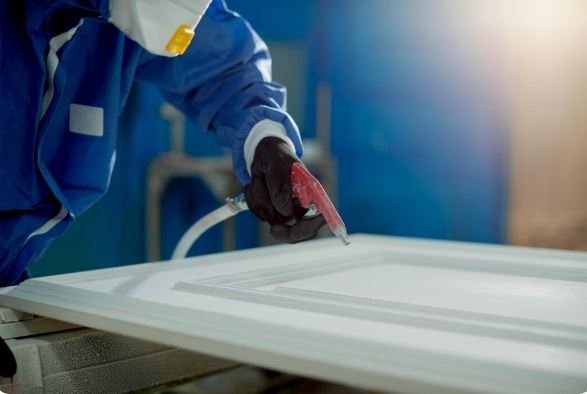
The application involves using a spray gun that charges the particles electrically and applies them evenly across the surface. Because of the electrostatic charge, the particles are attracted to the surface and wrap around edges and corners, ensuring complete coverage.
After application, the object is placed in a curing oven where heat activates the fusion process. The particles melt and form a continuous protective layer that hardens upon cooling.
This systematic approach ensures that powder coating delivers consistent and high-quality results every time.
Durability and performance benefits
One of the most notable characteristics of modern coating systems is their exceptional durability. Once cured, the coating forms a tough, resilient surface that can withstand mechanical impact, chemical exposure, and environmental stress.
Unlike traditional paint, which may peel or fade over time, coated surfaces maintain their appearance and functionality for extended periods. This makes them particularly valuable in demanding environments where maintenance is difficult or costly.
The resistance to corrosion is another key advantage. By creating a protective barrier between the material and external elements, the coating prevents oxidation and rust formation. This is especially important for metal components exposed to moisture or chemicals.
In addition, coated surfaces are easier to clean and maintain, further contributing to their long-term performance.
Environmental and sustainability considerations
Sustainability has become a major focus in modern manufacturing, and coating technologies have adapted to meet these demands. Traditional painting methods often involve harmful chemicals and solvents that contribute to air pollution and environmental degradation.
In contrast, powder coating is a cleaner alternative that produces minimal waste and no harmful emissions. Excess material can often be collected and reused, reducing overall material consumption.
Energy efficiency is another important factor. Although curing requires heat, advancements in technology have made the process more efficient, reducing energy usage over time.
By eliminating volatile organic compounds and reducing waste, this method supports environmentally responsible manufacturing practices.
Challenges and limitations
Despite its many advantages, coating technology does have certain limitations. One of the main challenges is the requirement for specialized equipment, including spray systems and curing ovens. This can increase initial setup costs for small-scale operations.
Another limitation is that the process is primarily suitable for heat-resistant materials. Some sensitive materials may not withstand the high temperatures required for curing.
Color changes and touch-ups can also be more complex compared to traditional paint systems, as the entire process must be repeated for repairs.
However, these challenges are often outweighed by the long-term benefits in terms of durability, efficiency, and performance.
Future developments in coating technology
The future of surface finishing is expected to bring further innovations in efficiency, sustainability, and customization. Research is ongoing into low-temperature curing systems that expand the range of materials that can be coated.
Advancements in automation and robotics are also improving precision and consistency in application. Smart coating systems that can self-heal or respond to environmental changes are being explored for specialized applications.
As industries continue to prioritize sustainability, environmentally friendly solutions will become even more important. The continued evolution of powder coating technology will likely play a key role in meeting these demands.
Conclusion
Surface finishing is an essential part of modern manufacturing, ensuring that products are durable, functional, and visually appealing. Advanced coating methods have revolutionized this process by offering superior protection and efficiency compared to traditional techniques.
The widespread adoption of powder coating demonstrates its effectiveness in delivering long-lasting performance while supporting environmentally responsible practices. Its ability to provide uniform coverage, strong durability, and reduced environmental impact makes it a preferred choice across multiple industries.
As technology continues to advance, coating systems will become even more efficient and versatile, further enhancing their role in modern production and design.