In India, the mode of business interaction is rapidly developing, where businesses no longer want to deal with the hassle of manual calling. While handling bulk volume of customer interaction, many organizations still struggle with the same old traditional IVR menus that often fails to align with the scalability of their business. The good news? This scenario is rapidly getting replaced with smart automation tools that can answer calls, qualify leads, schedule appointments, collect feedback, and handle support requests with speed and consistency. This is why demand for AI Voicebot providers in India has increased across industries such as healthcare, BFSI, ecommerce, education, logistics, and real estate.
Businesses now-a-days seek faster response times, lower calling costs, and enhanced customer experiences. Voice technology powered by AI helps them achieve all business aspects. Whether it is inbound customer support or outbound campaigns, voice automation has become a strong competitive advantage.
What is an AI Voicebot?
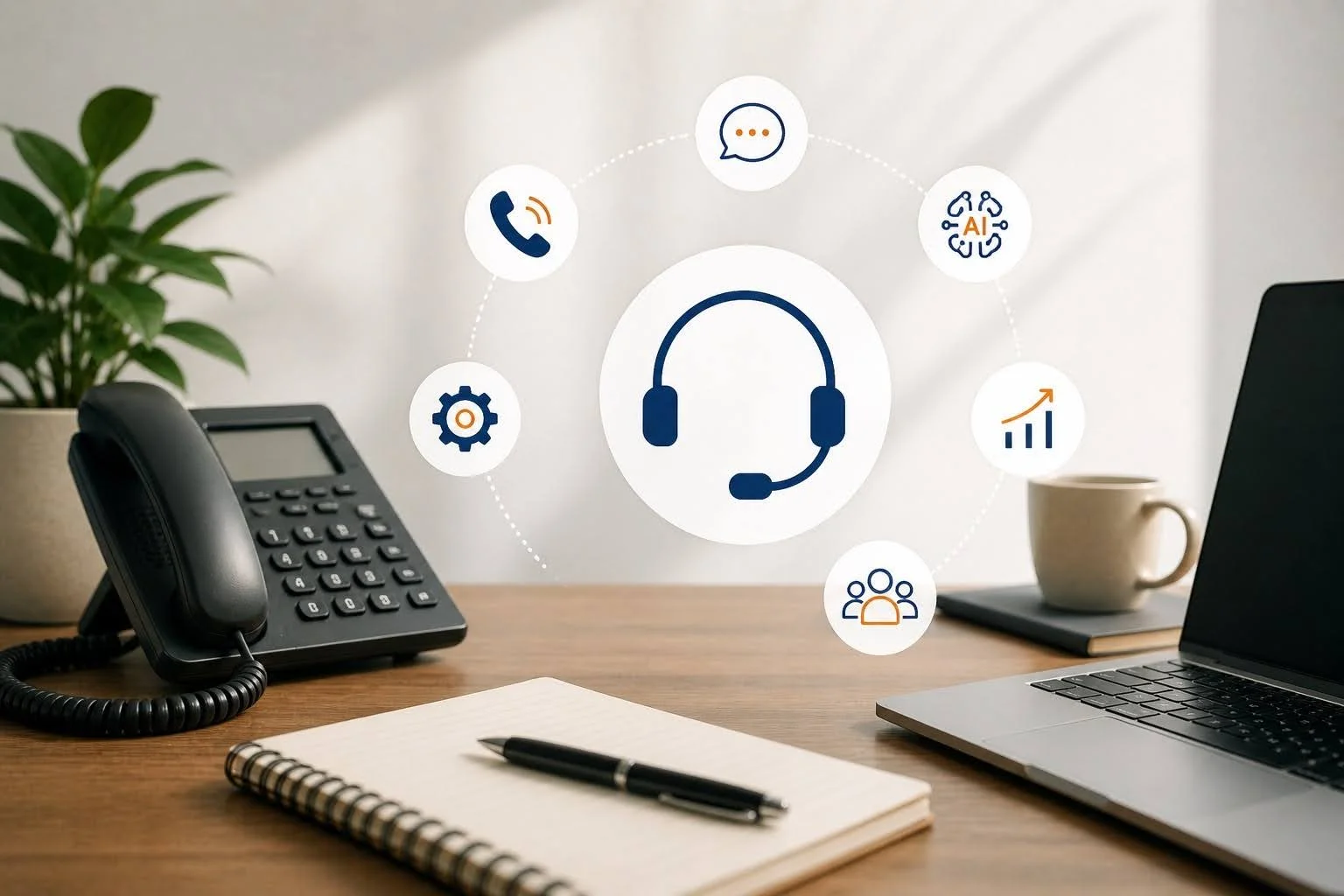
An AI voicebot is a conversational AI assistant powered by speech recognition, natural language processing, and machine learning, which seamlessly handles customer interaction in real-time. It can understand spoken queries, respond in a human way, and complete tasks without any manual intervention. Unlike traditional IVR systems that rely on keypad inputs, AI voicebots create more intelligent and dynamic conversations. Many businesses now rely on AI Voicebot in India for appointment reminders, collections, customer support, order confirmations, surveys, and lead nurturing. These systems can handle high call volumes, stay active round-the-clock, and optimize response efficiency while reducing operational pressure on teams.
Top 7 AI Voicebot Providers in India
MCUBE
When it comes to searching for the best AI voicebot providers, MCUBE ranks on the top for businesses seeking a complete communication automation platform. Its focus area lies in combining AI voicebots, autodialers, IVR, CRM integration, analytics, and outbound campaign tools in a consolidated system. What sets MCUBE apart is what its voicebot can do as part of the unified ecosystem, handling everything from call initiation, speech-to-text conversion, context understanding, and decision making. A bot-handled inbound call can escalate seamlessly to a live agent. An outbound voicebot campaign can trigger an SMS follow-up the moment a lead shows interest. Every interaction automatically logs back to your existing CRM with zero scope for manual entry or data gaps. The entire journey is managed from a single dashboard that your team can actually understand and navigate.
Gnani.ai
Gnani.ai is known for speech recognition and enterprise-grade voice automation. It has strong multilingual capabilities and serves industries such as banking, telecom, and customer service. The platform majorly focuses on speech intelligence, conversational automation, and voice analytics. This conversational AI platform delivers low-error natural language understanding for collections, sales, and IVR routing. It supports multimodal flows across voice, chat, SMS, and WhatsApp, with Inya Shield for voice biometrics and anti-spoofing.
Yellow.ai
Though primarily popular for its chatbots, Yellow.ai’s generative AI drives omnichannel agents across more than 35 channels, where its voice AI capabilities are valuable for enterprises who seek unified customer journeys across voice, WhatsApp, website chat, and apps. Features commonly involved in their AI-powered voicebots are multi-turn dialogue management, role-based access, multilingual NLU, and analytics for lifecycle optimization. It integrates with CRM or ticketing for sales or support, emphasizing enterprise security and scalability, which is suitable for hyper-personalized experiences.
Haptik
Haptik has been part of the Indian conversational AI story since the early days, and has positioned itself among the top 7 conversational automation providers in India. Their voice capabilities particularly benefit structured support use cases such as FAQs, service requests, ticket handling, order updates, and customer care flows. Haptik plays a strategic part in bridging voice and chat across the channels Indian consumers typically use: WhatsApp, mobile apps, and web interfaces. Its NLP models are fine-tuned for regional Indian dialects that help serve customers in markets where language can shift significantly from one district to the next. For telecom companies managing bill payments and plan upgrades at scale, or fintech startups running loan application flows and EMI reminders, Haptik offers a multi-channel approach that reduces the need to build separate solutions for voice and chat.
SquadStack
SquadStack’s AI voicebot solution is outcome-driven, which primarily focuses on generating qualified leads, booking appointments, customer support, collections, credit card sales, and ROI. They prioritize human-first conversational AI for sales follow-ups and appointment booking in regional dialects and claim low latency, strong connectivity, omnichannel context, and measurable business outcomes such as lower acquisition costs and conversion optimization. Quick deployment and natural-sounding calls make it accessible for startups scaling outbound efforts, where mid-market teams can emphasize on conversions over complexity.
Bolna
As an AI voicebot provider, Bolna offers flexible voice AI infrastructure for custom inbound or outbound setups, taking regional languages into consideration. What makes Bolna stand in this list is its model-agnostic orchestration strategy. Instead of locking businesses into a specific AI model’s capabilities and pricing, Bolna automatically selects the optimal blend of models for each call, drawing from its own proprietary model, OpenAI, Sarvam AI, and others, depending on language, region, use case, and cost-efficiency requirements. Developers leverage its APIs to boost sales and contact center solutions.
Exotel
As a core cloud telephony service provider, Exotel now embeds AI calling for hybrid inbound or outbound scale with multiple regional support. Enterprise integrations ensure reliability, though it’s less specialized in pure voicebot automation. Exotel’s AI voicebot solutions offer a real-time voice streaming layer that connects AI bots to users across PSTN, WhatsApp, in-app channels, and WebRTC. Businesses and development teams seeking a compliant, telecom-grade find Exotel helpful to streamline customer interaction.
Conclusion
The Indian AI voicebot market isn’t a niche technology story anymore; it’s dominating how the businesses are streamlining communication. With the ever-evolving customer expectation, call volumes grow, and the cost of scaling, hiring manual support is no longer an intelligent solution anymore. The real question for most businesses now has shifted from “should we use AI voice automation?” to “which platform should we use, and how fast can we get started?” This shift may bring a meaningful advantage for businesses planning to scale their entire voice communication ecosystem and want results without complexity.
FAQs
-
Does the bot actually stop the moment a customer starts speaking?
A well-designed voicebot is able to detect human speech within milliseconds from the moment a customer starts talking. It then pauses its own output immediately without waiting for the complete sentence to end, or without finishing its current thought. This is called real-time barge-in detection, which is non-negotiable for any customer-facing deployment.
-
Does the voicebot access live CRM data during the call, or only before and after?
Real-time CRM access helps the bot go through a customer’s account status, payment history, open tickets, or previous interaction notes at any point mid-conversation, not just at the start or at the end. This is what enables relevant and smart responses from the voicebot, instead of generic scripted responses that ignore what you already know about the customer.
-
Can an AI voicebot handle mid-conversation language switching?
Yes. Advanced systems supported by robust conversational AI helps detect language shift mid-conversation in real time and respond accordingly without impacting the conversation flow. However, this capability is entirely dependent on support for multilingual NLP models and context recognition across multiple languages.