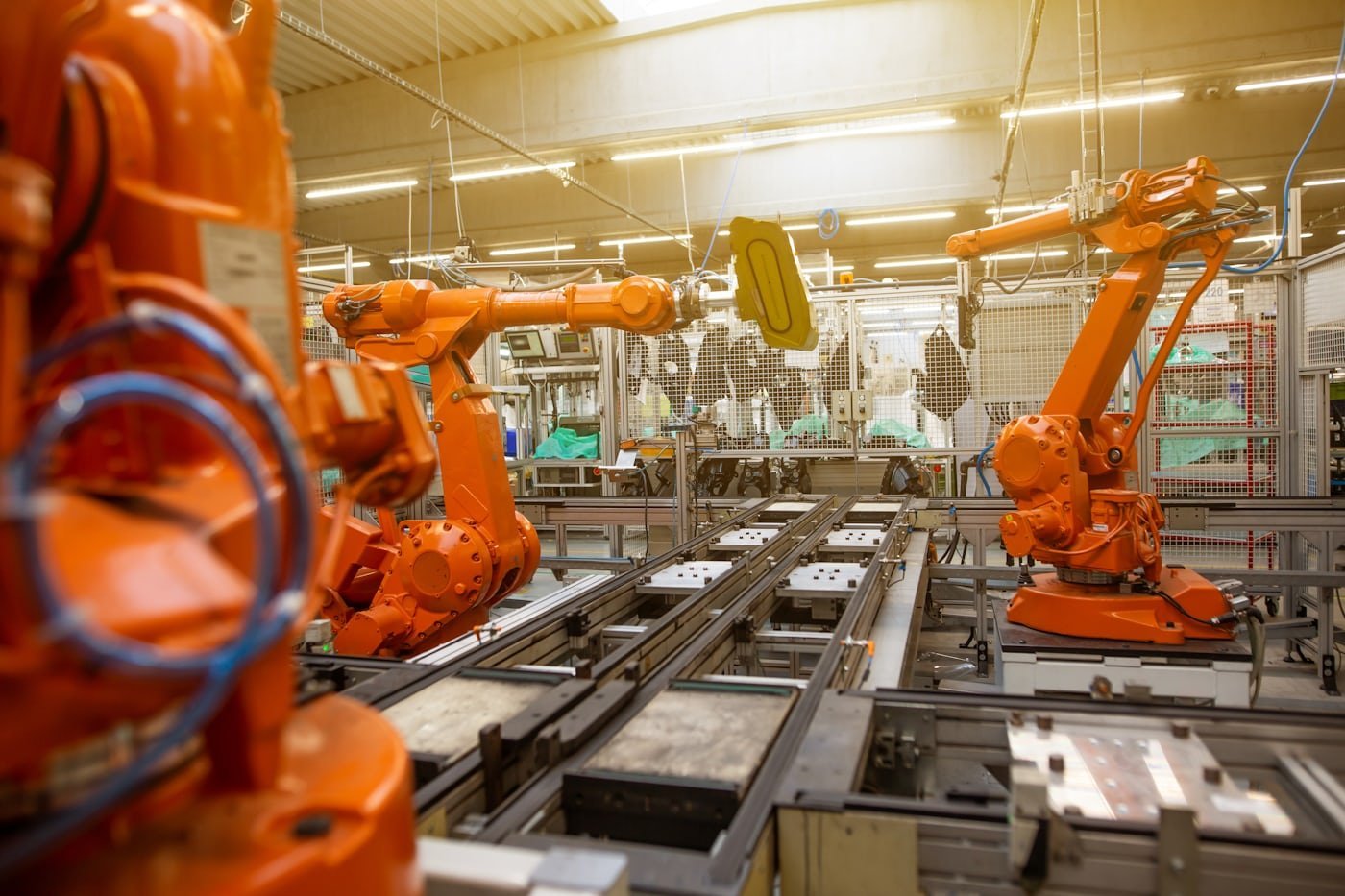
In today’s fast-growing industrial world, automation has become a core requirement for efficiency, accuracy, and cost reduction. Robotics is now widely used in manufacturing, logistics, healthcare, packaging, and warehousing. Among all robotic components, the gripper system plays one of the most important roles because it allows robots to physically interact with objects.
As industries move toward smarter and more flexible automation, traditional gripping systems are no longer enough. Modern applications require adaptive, delicate, and intelligent gripping solutions. This has led to the development of advanced robotic technologies that can handle fragile, irregular, and heavy objects with equal precision.
Companies like SRT Soft Gripper are working in this field to develop innovative gripping systems that improve efficiency and reduce damage during handling. These innovations are reshaping industrial automation by combining flexibility with performance.
This article explains the evolution, applications, and future of robotic gripping systems while focusing on the latest technologies used in modern industries.
Evolution of Robotic Gripping Technology
Earlier robotic systems were built mainly for repetitive and heavy-duty tasks. They used rigid metal claws that were efficient but lacked sensitivity. These systems were not suitable for handling fragile or irregular objects such as glass, food products, or medical equipment.
As industries expanded, the demand for more advanced solutions increased. This led to innovation in the field of Robot Gripper Manufacturers, who started designing flexible and adaptive gripping systems.
One major advancement was the introduction of the Soft Gripper Robot, which uses flexible materials like silicone and rubber to gently hold objects without damaging them. This technology significantly improved automation in industries where precision handling is critical.
Growth of Soft Robotics in Modern Industry
Soft robotics is one of the most revolutionary developments in automation. Unlike traditional rigid systems, soft robots are designed to be flexible, safe, and adaptive. They can adjust their shape and pressure according to the object being handled.
The Soft Robotic Gripper is a perfect example of this technology. It allows robots to pick up fragile objects such as fruits, electronic components, and laboratory samples without causing any damage.
A more advanced version is the Strong Soft Robotic Gripper, which combines flexibility with higher load-bearing capacity. This makes it suitable for industries that require both strength and delicacy in one system.
These innovations are helping industries improve productivity while reducing product waste and operational risks.
Bio-Inspired Robotics and Human-Like Gripping Systems
Modern robotics is increasingly inspired by human anatomy and movement. One of the most advanced concepts in this field is Soft Finger Robotics, which replicates the movement and flexibility of human fingers.
This technology allows robots to grip objects of different shapes and sizes with high precision. It is especially useful in industries where traditional grippers cannot perform well due to irregular object shapes.
Soft finger-based systems are widely used in electronics assembly, medical handling, and research laboratories. They are also becoming popular in collaborative robotics, where robots work alongside humans in shared environments.
Industrial Applications of Advanced Gripping Systems
Robotic grippers are now used in a wide range of industries beyond traditional manufacturing.
One important application is the Robot Vacuum Gripper, which uses suction technology to pick up flat and smooth objects. This system is widely used in packaging, logistics, and warehouse automation where speed and accuracy are important.
Another advanced solution is the Pneumatic Magnetic Gripper, which combines air pressure and magnetic force to handle metallic objects safely and efficiently. This system is commonly used in automotive and heavy machinery industries.
The Robot Suction Gripper is also widely used in packaging industries. It is ideal for handling boxes, cartons, and lightweight products in fast-moving production lines. This improves efficiency in e-commerce fulfillment centers and distribution warehouses.
Engineering Advancements in Robotic Systems
Modern robotic systems are no longer simple mechanical tools. They are now intelligent machines equipped with sensors, control systems, and adaptive algorithms.
The Soft Robotic Gripper plays an important role in this development because it allows robots to adjust grip strength in real time based on object type and weight.
Industries are now focusing on integrating AI and machine learning into robotic systems to improve accuracy and decision-making. This ensures better performance in complex environments where objects vary in size, shape, and fragility.
SRT Soft Gripper has contributed to this progress by developing advanced gripping solutions that combine smart materials with modern control systems, helping industries achieve higher efficiency and reliability.
Key Benefits of Modern Gripping Technology
Advanced robotic gripping systems offer several advantages that make them essential for modern industries.
They improve speed and productivity by automating repetitive tasks. They also reduce product damage, especially in industries dealing with fragile materials. Another major benefit is improved workplace safety, as robots can handle dangerous or heavy tasks instead of humans.
The Soft Gripper Robot and Strong Soft Robotic Gripper are especially useful in environments where both precision and safety are required.
These systems also reduce operational costs by minimizing errors and improving overall efficiency in production lines.
Challenges in Robotic Gripping Technology
Despite rapid advancements, there are still some challenges in this field. One of the main challenges is improving durability while maintaining flexibility. Soft materials can wear out faster than traditional metal components.
Another challenge is energy efficiency, especially in systems that use pneumatic or vacuum mechanisms. Engineers are constantly working to improve power consumption without reducing performance.
Developing systems like Soft Finger Robotics that can fully replicate human dexterity is also a complex task. It requires advanced sensors, control systems, and material innovation.
Future of Robotic Gripping Systems
The future of robotic gripping technology is very promising. Researchers are working on hybrid systems that combine multiple technologies such as suction, vacuum, magnetic force, and soft robotics.
In the coming years, systems like the Robot Vacuum Gripper and Robot Suction Gripper will become even more advanced with AI-based control and real-time adaptability.
The Pneumatic Magnetic Gripper is also expected to evolve with stronger and more energy-efficient designs for heavy industries.
Soft robotics will continue to grow, making systems like the Soft Robotic Gripper and Soft Gripper Robot more intelligent and widely used across industries.
Industrial Impact and Market Expansion
The global demand for robotic automation is increasing rapidly. Industries such as e-commerce, automotive, healthcare, and food processing are driving this growth.
As a result, Robot Gripper Manufacturers are focusing on developing customized solutions that meet specific industrial needs.
Automation systems using suction and vacuum technology are becoming standard in warehouses and logistics centers. At the same time, hybrid systems combining magnetic and pneumatic features are gaining popularity in manufacturing industries.
SRT Soft Gripper is actively involved in this growing market by delivering advanced gripping solutions that support modern automation requirements.
Conclusion
Robotic gripping technology has transformed industrial automation by making processes faster, safer, and more efficient. From simple mechanical claws to intelligent adaptive systems, the evolution has been remarkable.
Technologies such as the Soft Robotic Gripper, Soft Gripper Robot, and Soft Finger Robotics are changing how machines interact with objects. Meanwhile, systems like the Robot Vacuum Gripper, Robot Suction Gripper, and Pneumatic Magnetic Gripper are expanding industrial capabilities across multiple sectors.
With continuous innovation, robotic gripping systems will become even more intelligent, adaptive, and powerful in the future.